

Home › Home air conditioning › Conservatories
Air conditioning for conservatories and glass extensions
Conservatories and glass-roofed extensions are too hot in summer and too cold in winter. An air conditioner deals with both, and turns a room you avoid for half the year into one you can actually use. Being honest about the glass is part of getting it right.
Free survey, no obligation. 0% VAT on home installations. F-Gas registered company (FGAS3011677).
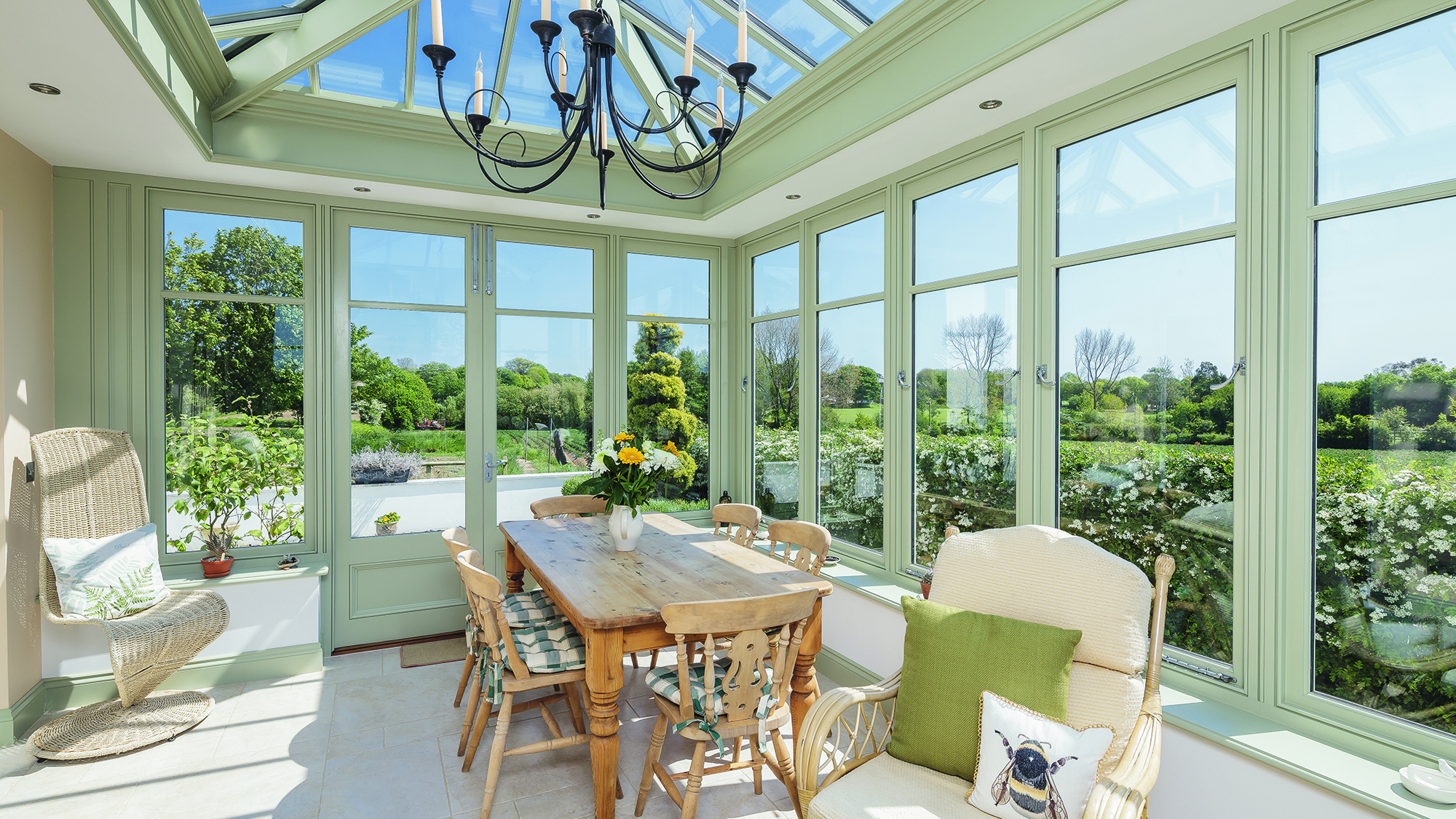
Conservatory installs at a glance
- Typical unit
- 3.5–5.0 kW
- Price from
- £2,500 supplied & fitted
- Best fit
- Floor-standing or wall-mounted
- Heating too
- Yes, same unit
- Survey
- Free
What size unit does a conservatory need?
Glass lets in far more heat than a solid wall or roof, so a conservatory needs a bigger unit than its floor area alone suggests. These are the starting sizes; we confirm on survey once we have seen the roof, the glazing and which way it faces.
| Conservatory | Floor area | Unit size | Fujitsu, from | Mitsubishi Electric AY, from | Daikin Perfera, from |
|---|---|---|---|---|---|
| Large room | 19–29 m² | 3.5 kW | £2,500 | £2,650 | £2,700 |
| Large living room | 30–36 m² | 4.2 kW | £2,600 | £2,750 | £2,800 |
| Open-plan room | 37–48 m² | 5.0 kW | £2,900 | £3,050 | £3,100 |
Prices are for one room, fully supplied and fitted, from our instant price calculator. Home installations carry 0% VAT. Your final price is fixed after the survey. Whole-house examples are in our London price guide.
These are our standard options. The prices above are for the systems we fit most often: Fujitsu, Mitsubishi Electric AY, Daikin Perfera and concealed ducted. Other brands and models are available if you would prefer, such as other Daikin and Mitsubishi Electric ranges, Toshiba, LG, Samsung or Panasonic. Just ask and we will price it for you.
Where the indoor unit goes
 Most common
Floor-standing
Most conservatories have glass where a wall unit would go. A floor-standing unit sits on the dwarf wall or below the glazing and blows air up across the room.
 House wall
Wall-mounted
If the conservatory backs onto a solid house wall with space up high, a wall unit there is usually the cheapest option.
ExtensionsGlass-roofed extensions
Kitchen extensions with large rooflights behave like conservatories. We size for the glass, not just the floor area.
What air conditioning can and can’t do
An air conditioner makes a conservatory comfortable for most of the year. On the hottest afternoon of the year, an older all-glass roof in full sun will still feel warm near the glass, because no reasonably sized unit can cancel that much heat.
If yours is a polycarbonate or old glass roof, solar control film, blinds or a replacement solid or insulated roof make a big difference, and mean a smaller unit can do the job.
In winter the same unit heats, and heat pumps heat efficiently, so it is usually a cheaper way to keep a conservatory warm than an electric heater.

Do you need planning permission?
The short version for houses in England: an air conditioner that heats as well as cools (an air-to-air heat pump) can be permitted development, so no planning application, as long as it meets the national conditions. It must not be used only for cooling. On a terraced or semi-detached house only the first outdoor unit is covered. It can’t go on a pitched roof, or above ground-floor level on a wall that faces the road. In a conservation area it can’t go on a wall or roof facing the road at all, and listed buildings always need consent.
Flats are different: you will normally need written consent from your freeholder or managing agent under your lease. Councils can also remove permitted development rights with an Article 4 direction.
Source: Planning Portal, air source heat pumps. If your home is listed, in a conservation area or covered by an Article 4 direction, check with your council before work starts.
What happens on the day
- Agree positions. Dust sheets down, then we confirm exactly where the indoor and outdoor units go before drilling anything.
- One hole through the wall. Behind the indoor unit, for the refrigerant pipes, cable and drain.
- Outdoor unit and pipework. On wall brackets or anti-vibration feet, with any visible pipework in neat trunking.
- Test before it runs. The pipework is pressure-tested and vacuumed before the refrigerant is released, which is what stops slow leaks later.
- Handover. We commission the system, show you the remote or app, and leave the paperwork for your warranty.
Conservatory questions
Can air conditioning cool a conservatory in a heatwave?
It will make a big difference, but an old all-glass roof in full sun is hard to cool completely. Blinds or solar film on the roof help the unit a lot.
Will it heat the conservatory in winter?
Yes. Every system we fit is a heat pump, so the same unit heats and cools.
Where does the outdoor unit go?
Usually beside the conservatory on the ground, or on the house wall nearby, keeping the pipe run short.
Get a conservatory price in two minutes
Tell us the size and we will show you four options with fixed starting prices.
Other rooms we cool
- Bedrooms
- Loft rooms
- Living rooms
- Home offices
- Garden rooms
- Conservatories
- Flats
- Several rooms
- Offices & shops
See the areas we cover across London, Surrey and Hertfordshire